







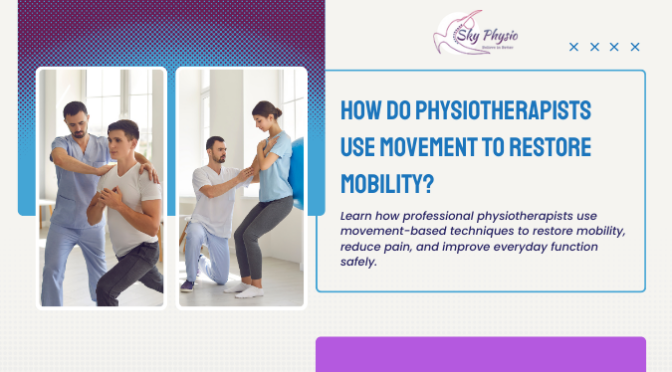
Movement is at the heart of everything a physiotherapist does. Whether you’re recovering from an injury, managing chronic pain, or regaining function after surgery, the right movement can restore strength, flexibility, and confidence. Physiotherapists don’t just treat symptoms, as they analyse how your body moves and guide it back to its optimal function. This blog explains how physiotherapists use movement-based techniques to restore mobility and why this approach is so effective for long-term recovery.
Understanding Mobility and Why It Matters
Mobility refers to your ability to move joints and muscles freely, smoothly, and without pain. When mobility is restricted, everyday tasks such as walking, bending, or reaching become difficult. Reduced mobility can stem from injury, poor posture, surgery, neurological conditions, or prolonged inactivity.
A physiotherapist in Clyde North focuses on identifying the root cause of mobility loss rather than just addressing pain. By improving movement quality, physiotherapy helps reduce stiffness, prevent further injury, and enhance overall physical independence.
Movement Assessment: Foundation of Treatment
Before prescribing exercises, a physiotherapist conducts a detailed movement assessment. This involves observing posture, gait, joint range of motion, muscle strength, and coordination. These assessments reveal compensatory patterns, ways your body adapts to pain or weakness, which often contribute to ongoing issues.
A skilled physio in Clyde North uses this information to design a personalised treatment plan, ensuring that every movement prescribed serves a clear purpose in restoring mobility safely and efficiently.
Targeted Exercise Therapy
Exercise therapy is one of the most powerful tools physiotherapists use to restore movement. These exercises are not generic workouts; they are carefully selected movements tailored to your condition, ability, and recovery stage.
Exercises may include:
- Range-of-motion exercises to reduce stiffness
- Strengthening exercises to support joints and muscles
- Stretching routines to improve flexibility
- Functional movements that mimic daily activities
Over time, these exercises retrain the body to move correctly, improving balance, coordination, and endurance.
Guided Functional Movement Training
Physiotherapists also focus heavily on functional movement, how you move in real life. This includes activities like standing up from a chair, climbing stairs, lifting objects, or walking efficiently. By breaking down these movements and rebuilding them step by step, physiotherapists help patients regain confidence in their bodies. Even when seeking a cheap physio in Clyde North, evidence-based functional movement training remains a core component of quality physiotherapy care.
Neuromuscular Re-education
In cases involving nerve injuries, stroke, or prolonged pain, the brain may lose its connection with certain muscles. Physiotherapists use repetitive, controlled movements to “re-educate” the nervous system. This process improves muscle activation, timing, and coordination, allowing smoother and more natural movement patterns to return.
Physiotherapists use movement as medicine. Through assessment, tailored exercises, functional training, and neuromuscular re-education, they restore mobility by addressing the root cause of dysfunction not just the symptoms. Whether you’re recovering from injury or aiming to move better in everyday life, physiotherapy provides a structured, safe, and effective pathway back to confident movement.

Book An Appointment Today
Book an appointment with SKY PHYSIO and take the first step towards moving freely and confidently again. For more information, contact us at 0489233321 or email us at info@skyphysio.com.au
2. Why is movement so important in physiotherapy?
Movement helps reduce stiffness, improves blood flow, retrains muscles, and prevents further injury, making it essential for long-term recovery and independence.
3. What types of movements do physiotherapists prescribe?
Physiotherapists prescribe range-of-motion exercises, strengthening routines, balance training, posture correction, and functional movements tailored to daily activities.
4. Is movement-based physiotherapy safe if I’m in pain?
Yes. A physiotherapist carefully selects gentle, controlled movements based on your condition to reduce pain while restoring mobility safely.
5. How does a physiotherapist decide which movements I need?
A physiotherapist assesses posture, joint mobility, muscle strength, and movement patterns to identify restrictions and create a personalised treatment plan.
6. How long does it take for movement therapy to improve mobility?
Improvement timelines vary depending on the condition, but many people notice better movement and reduced stiffness within a few sessions when exercises are done consistently.
7. Can physiotherapy help restore mobility after surgery or injury?
Absolutely. Physiotherapists guide progressive movements that rebuild strength, flexibility, and function after surgery, fractures, or soft tissue injuries.
8. What is functional movement training in physiotherapy?
Functional movement training focuses on everyday actions like walking, lifting, bending, or climbing stairs to help patients move confidently in real-life situations.
9. Do I need to continue movement exercises at home?
Yes. Home exercises are a vital part of physiotherapy, helping maintain progress, speed up recovery, and prevent mobility issues from returning.
10. Can movement-based physiotherapy prevent future mobility problems?
Yes. By improving posture, strength, and movement patterns, physiotherapy reduces the risk of future injuries and long-term mobility limitations.