








Injury prevention is just as important as performance training for athletes. Whether you’re a weekend runner, a competitive footballer, or a gym enthusiast in Melbourne or Pakenham, sports injuries can disrupt progress, reduce confidence, and keep you sidelined for weeks—or longer. Physiotherapy plays a key role in keeping athletes strong, mobile, and resilient by addressing muscle imbalances, joint stability, and movement efficiency. Below are some of the most effective physiotherapy exercises athletes can use to reduce injury risk and stay game-ready.
Why Injury Prevention Matters in Sport?
Most sports injuries don’t happen overnight. They develop due to poor movement patterns, muscle imbalances, overuse, or inadequate recovery. Physiotherapy-based exercises target these issues early, improving strength, flexibility, coordination, and body awareness. When performed consistently, these exercises help athletes move better, absorb impact safely, and cope with the physical demands of their sport.
-
Key Physiotherapy Exercises for Injury Prevention
Some of the exercises for injury prevention promoted in the best sports physiotherapy Melbourne and other regions include:
-
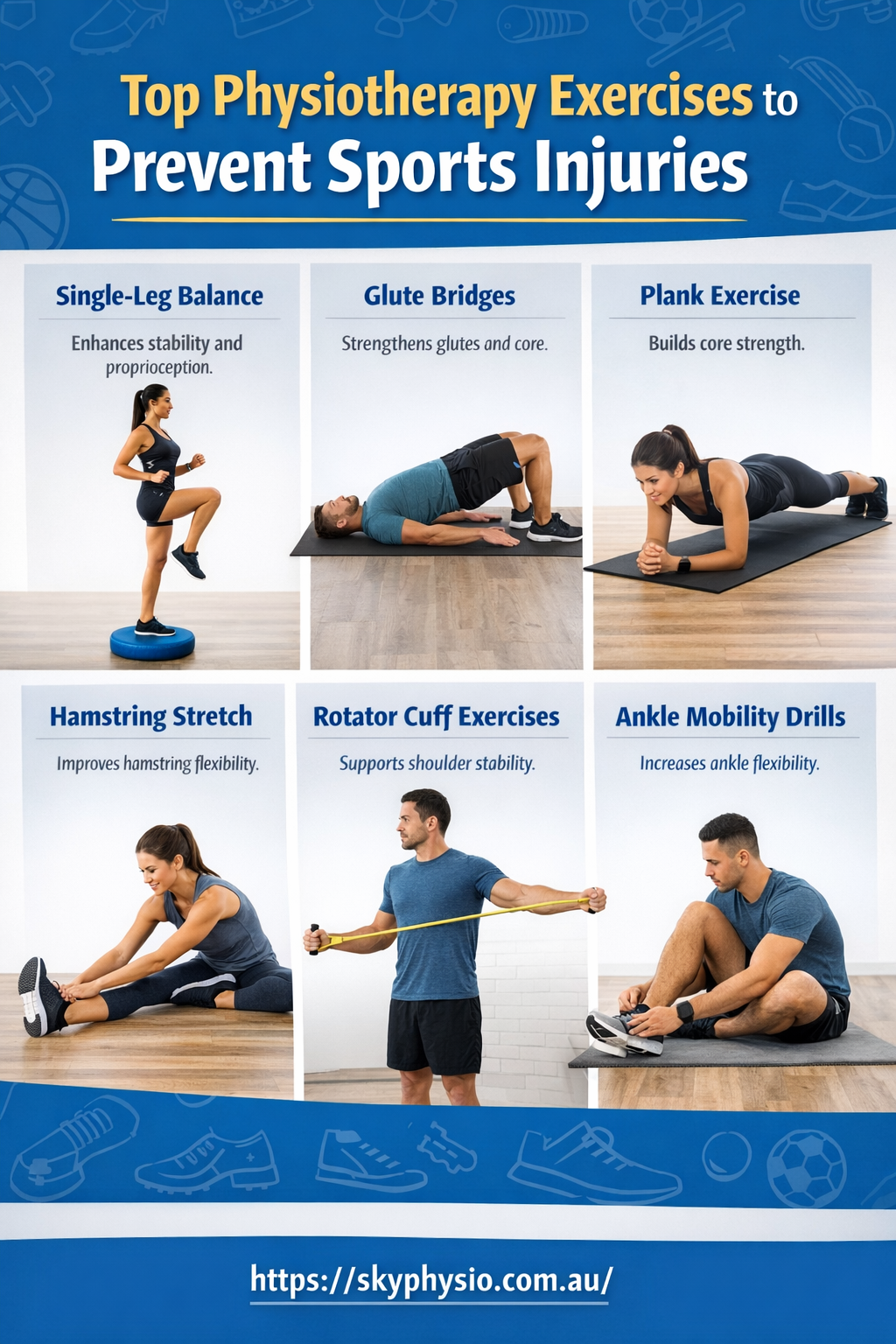
Single-Leg Balance Exercises
Balance training improves proprioception—the body’s ability to sense movement and position. Standing on one leg challenges ankle, knee, and hip stability, reducing the risk of sprains and falls. Progressions such as closing your eyes or standing on an unstable surface further enhance joint control.
-
Glute Bridges
Weak glutes are a common cause of knee, hip, and lower back injuries. Glute bridges strengthen the posterior chain, helping stabilise the pelvis during running, jumping, and lifting. This exercise is particularly beneficial for athletes involved in sprinting and field sports.
-
Planks and Core Stability Exercises
A strong core provides a stable base for all athletic movements. Planks activate deep abdominal muscles that protect the spine and improve force transfer between the upper and lower body. Side planks are especially useful for preventing lower back and hip injuries.
-
Hamstring and Hip Flexor Mobility Drills
Tight hamstrings and hip flexors increase the risk of muscle strains, especially in sports that involve sprinting and kicking. Controlled stretching and mobility drills maintain muscle length and reduce excessive strain during explosive movements.
-
Shoulder Stability and Rotator Cuff Exercises
For athletes involved in throwing, swimming, or overhead movements, shoulder injuries are common. Resistance band exercises targeting the rotator cuff improve shoulder stability, control, and endurance, reducing the likelihood of strains and impingements.
-
Ankle Mobility and Strength Exercises
Limited ankle mobility can affect running mechanics and jumping ability, increasing the risk of Achilles and knee injuries. Calf raises, ankle circles, and controlled dorsiflexion exercises improve flexibility and strength around the ankle joint.
How Often Should Athletes Do These Exercises?
Injury prevention exercises as part of sports physiotherapy in Pakenham and other regions should be performed two to four times per week, depending on training load and sport demands. They can be incorporated into warm-ups, cooldowns, or recovery sessions. Consistency is key—small efforts over time produce the best results.
The Role of Physiotherapy in Long-Term Performance
Physiotherapists don’t just treat injuries—they help prevent them. A tailored physiotherapy program considers your sport, position, training volume, and previous injuries. This personalised approach ensures you’re strengthening the right areas and correcting movement patterns before they become problems.
Final Thoughts
Preventing sports injuries isn’t about training less—it’s about training smarter. By including targeted sports massage in Pakenham in your routine, you can improve performance, reduce downtime, and enjoy your sport with confidence. Stronger muscles, better balance, and improved mobility all contribute to a healthier, more resilient athletic body.
Schedule a Physiotherapy Session with Us
To book a sports physiotherapy session with SKY PHYSIO, call 0489233321 now or send an email to info@skyphysio.com.au now
2. Can physiotherapy exercises reduce the risk of recurring injuries?
They can significantly lower the risk by correcting movement faults, strengthening weak areas, and improving load tolerance over time.
3. Should these exercises be done before or after training?
They can be included in warm-ups for activation or after training as part of recovery, depending on the exercise type.
4. Do endurance athletes and strength athletes need different prevention exercises?
Yes. Exercise selection should reflect sport-specific demands, impact levels, and common injury risks.
5. How long does it take to see injury-prevention benefits?
Improvements in control and stability can occur within weeks, while long-term protection builds with consistent practice.
6. Can athletes continue these exercises during competition season?
Absolutely. These exercises help manage fatigue and maintain joint stability during high training and competition loads.
7. Are balance exercises really effective for injury prevention?
Yes. Balance training improves neuromuscular control, which is critical for preventing ankle, knee, and hip injuries.
8. How do mobility exercises help prevent muscle strains?
They maintain optimal muscle length and joint range, reducing excessive tension during fast or explosive movements.
9. Should athletes stop these exercises once they feel strong?
No. Injury prevention works best as an ongoing part of training, not a short-term fix.
10. When should an athlete seek personalised physiotherapy advice?
If there’s a history of injury, persistent tightness, or performance limitations, tailored guidance is strongly recommended.