







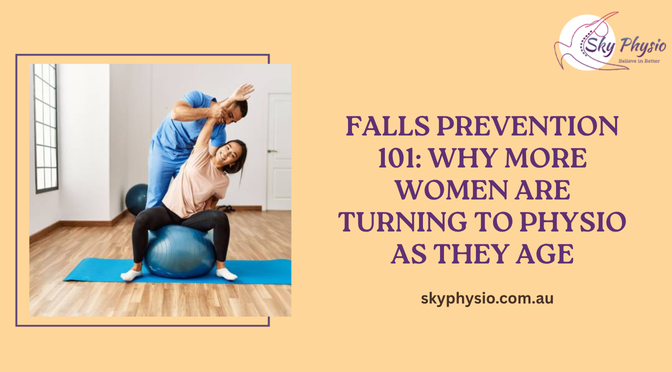
Falls are not just an unlucky slip on a wet floor. For women, ageing brings a distinct set of risk factors, from bone density loss after menopause to changes in pelvic floor strength that affect balance and core stability. As Berwick’s population of older women grows, more are asking the same question: how do we stay steady on our feet for longer? Increasingly, the answer starts with a physiotherapist, not an ambulance.
What Actually Causes Falls in Women as They Age?
Falls rarely come down to one single cause, but for women, some factors are more pronounced. Muscle weakness in the legs and core makes it harder to catch yourself when you stumble, and this is often compounded by a weakened pelvic floor, which plays a bigger role in balance and posture than most people realise. Add in reduced bone density, medication side effects, or simply rushing to answer the phone, and the risk stacks up quickly. Many of these factors stay invisible until a fall actually happens.
How Physiotherapy Helps Prevent Falls
This is where falls prevention physiotherapy earns its reputation. A physio does not just treat injuries after they occur, they work to stop them occurring in the first place. A typical assessment looks at gait, balance, muscle strength, and joint flexibility. For many women, this also includes a conversation about pelvic floor function, since core and pelvic strength are closely linked to stability. This is one reason Women’s Pelvic Health Physio in Berwick has become such a natural extension of falls prevention care, addressing balance and continence concerns in the same program.
Why Are Berwick Women Paying More Attention to This?
Berwick has a growing number of women wanting to stay active and independent well into their later years. Ageing in place only works if mobility and confidence hold up, and that is exactly what a falls prevention program supports. Local clinics are seeing more women referred proactively, from GPs, family members, and aged care coordinators who recognise that prevention is far cheaper and kinder than recovery.
What a Falls Prevention Program Actually Involves
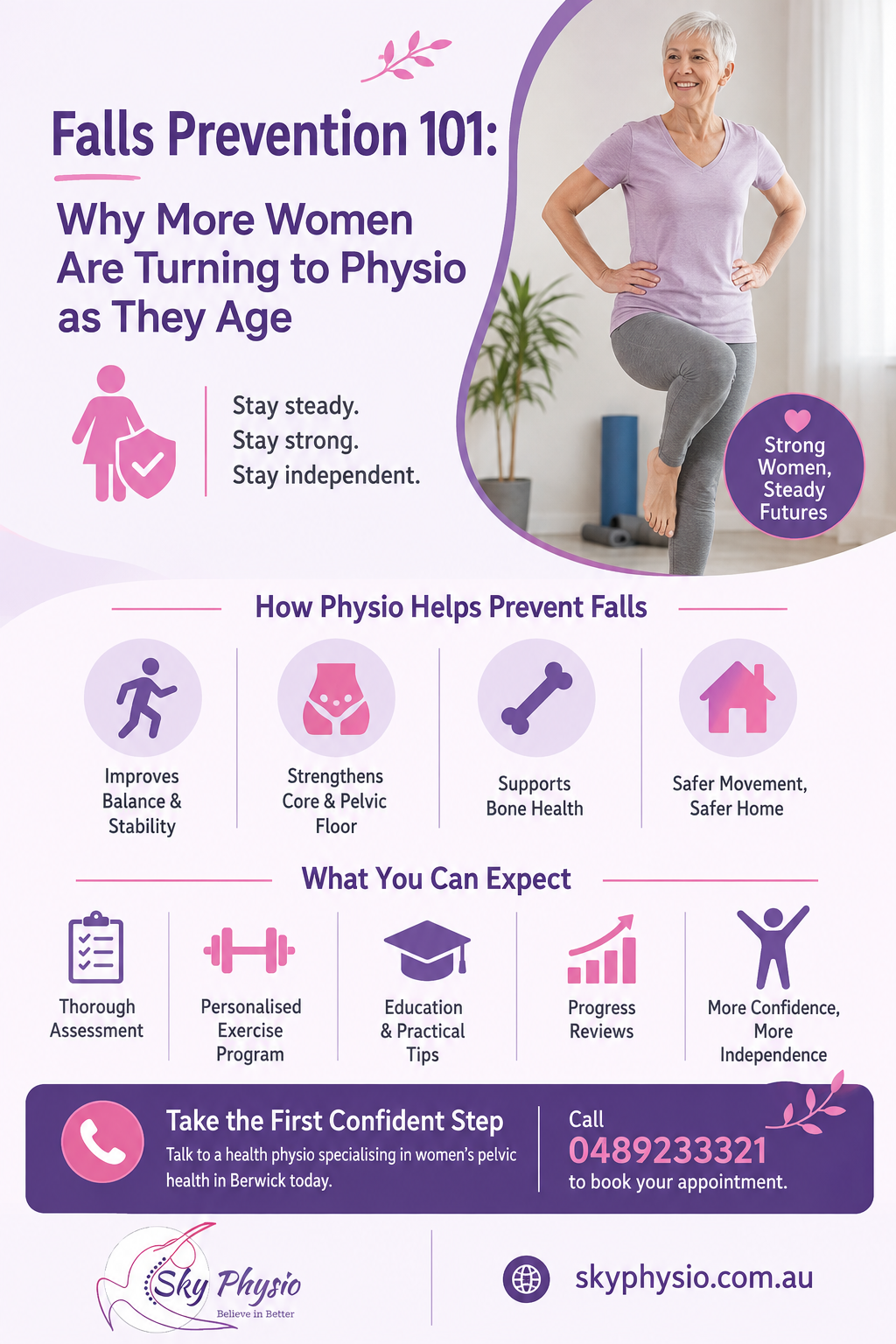
Most programs follow a similar structure:
- Initial assessment covering strength, balance, bone health history, and medication review with a GP
- Individualised exercise plan, often including pelvic floor and core strengthening alongside lower limb work
- Education on safe movement, footwear, and home hazard awareness
- Progress reviews to adjust intensity as strength and confidence improve
Is It Ever Too Early or Too Late to Start?
Neither. Falls prevention works best as a proactive measure, but it also delivers real benefits for women recovering from a previous fall or managing osteoporosis. The earlier the intervention, the more independence is preserved.
The Bottom Line for Berwick Women
A fall can change everything in a moment, but much of that risk is manageable with the right support. For Berwick women wanting to protect their independence, a conversation with a local women’s pelvic health physio in Berwick is a small step that can prevent a much bigger fall.
Take the First Confident Step
Talk to a health physio specialising in women’s pelvic health in Berwick today and take the first confident step toward better balance and lasting independence. If you are looking for a professional, SKY PHYSIO is here to take care of your needs. Call 0489233321 now.
FAQs About Falls Prevention 101: Why More Women Are Turning to Physio as They Age
- How many physio sessions are usually needed for falls prevention?
Most programs start with a course of six to eight sessions, though this varies depending on individual strength, balance levels, and goals. Ongoing maintenance sessions are often recommended every few months to sustain progress.
- Can falls prevention exercises be done at home?
Yes, a physio will typically provide a home exercise program alongside in-clinic sessions. This helps build strength and balance between appointments and makes progress more consistent.
- Do I need a GP referral to see a physio for falls prevention?
A referral is not always required to book an appointment, but a GP referral under a Chronic Disease Management plan can make sessions more affordable through Medicare rebates.
- What is the connection between pelvic floor strength and balance?
The pelvic floor works together with the core and deep spinal muscles to support posture and stability. When it weakens, it can affect how the body controls movement, which increases fall risk.
- How long does it take to notice improvements in balance and strength?
Many women notice small improvements in confidence and stability within four to six weeks of consistent exercise, with more significant strength gains building over three months or longer.
- Are falls prevention programs only for women who have already fallen?
No, these programs are just as valuable as a preventative measure. Starting before a fall occurs often leads to better long term outcomes and greater independence.