







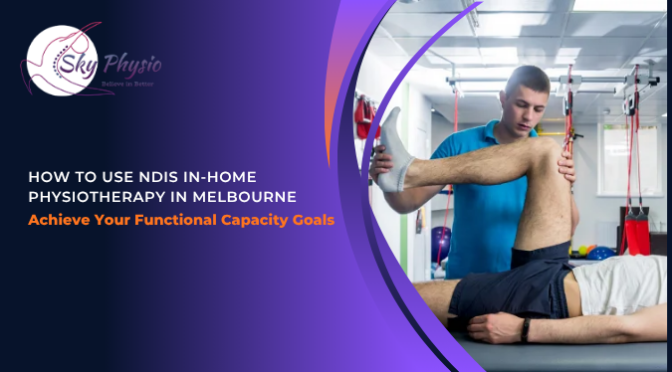
NDIS participants in Victoria can fund mobile, home-based therapeutic support directly through their Capacity Building (CB) – Improved Daily Living budget. Working with a registered provider of NDIS physiotherapy Melbourne ensures that clinical interventions, mobility assessments, and specialised physical training align directly with your NDIA functional capacity goals, resulting in $0 out-of-pocket costs. Mobile therapy removes transit barriers, allowing participants to build independence in their own home environments.
Understanding Your NDIS Budget for Physiotherapy in Victoria
When navigating the National Disability Insurance Scheme, funding allocation can be overwhelming at times. To ensure your therapy is fully funded, it is critical to align your treatments with the correct budget lines.
For continuous, goal-oriented rehabilitation, treatments are funded via Capacity Building (Category 15: Improved Daily Living). This specific pool is designed to help you develop the skills and physical capacity needed to complete everyday tasks independently.
Alternatively, if a therapist identifies a need for physical mobility equipment, your Core Supports (Consumables / Low-Cost Assistive Technology) budget can be utilised to fund aids under $1,500 based on clinical recommendations.
The Home-Visit Advantage: Real-World Therapy in Melbourne Suburbs
Clinical exercises vary when implemented in a real-world setting. Opting for mobile, home-based therapy allows your clinician to assess physical environments directly, modifying treatments to fit the structural reality of your home.
Whether you are looking for a multi-story apartment in Southbank, getting ready for home modifications for a heritage house in Camberwell, or planning to access community hubs across the City of Glen Eira and Pakenham, proceeding with planning significantly accelerates your functional gains.
At SKY PHYSIO, our mobile team brings clinical expertise directly to your door to transform your space into a fulfilling rehabilitation environment.
The Step-by-Step Path: From Hospital Discharge to Active In-Home Therapy
Managing transitions within the healthcare system requires clear, logical progression. This particular timeline maps out how participants can smoothly transition from an acute hospital stay or initial referral into a sustainable home-care routine.
1. Coordinate the Referral:
Your Support Coordinator, Plan Manager, or family member submits your current NDIS goals and primary diagnosis directly to our team at SKY PHYSIO.
2. Establish the Service Agreement:
Before clinical visits begin, a formal Service Agreement is created. This document outlines pricing limits, hours allocated, and travel limits allowed under standard metropolitan Melbourne zones.
3. Initial Functional Assessment:
An AHPRA-registered physiotherapist conducts an in-depth home assessment, analysing transfer safety, joint mobility, baseline strength, and potential risks.
4. Progress Reporting & Review:
Before your scheduled NDIA plan review, your therapist compiles a comprehensive progress report documenting functional gains to help secure funding for your next cycle.
Support for Diverse Clinical Diagnoses
In-home therapeutic support is highly adaptable, providing essential interventions across a broad spectrum of physical, cognitive, and neurological conditions:
- Neurological Conditions: Targeted motor-pattern training and neuro-rehabilitation for individuals managing Stroke recovery, Multiple Sclerosis (MS), and Parkinson’s disease.
- Physical & Musculoskeletal Disabilities: Specialised strength, balance, and alignment conditioning for conditions like Cerebral Palsy or severe spinal injuries.
- Post-Surgical Rehabilitation: Guided home recovery exercises designed to rebuild joint flexibility and strength safely following major surgeries.
- Falls Prevention: Coordination exercises and balance training to minimise environmental fall risks and build daily confidence.
Comparing the two: In-Clinic vs. Mobile NDIS Support
To help you choose the best format for your lifestyle and care plan, this table breaks down how delivery styles impact daily logistics.
| Operational Feature | In-Clinic Physiotherapy | Mobile In-Home Physiotherapy |
| Travel Requirements | Participants must arrange transport to a physical clinic facility. | $0 Transit Hassle. The clinician travels directly to your home. |
| Environment Focus | Exercises are conducted using specialised, static clinic gym equipment. | Real-World Context. Movements are practiced on your own stairs, beds, and chairs. |
| Budget Impact | Standard hourly rate billing without additional travel cost allowances. | Billed hourly, including standard capped provider travel time (up to 30 mins for Metro Zone 1). |
| Scheduling Flexibility | Constrained by clinic operating hours and room availability. | Highly flexible scheduling designed to blend into your home routine. |
Partner with Melbourne’s Trusted NDIS Care Provider
Don’t let your allocated Capacity Building budget roll over unused. At SKY PHYSIO, our team of mobile, AHPRA-registered therapists are dedicated to delivering professional, evidence-based care in the comfort of your own home. Whether you are aiming to improve independent transfers, build community mobility, or manage chronic discomfort, we tailor our interventions to make your goals achievable.
Ready to book an intake? Connect with the team at SKY PHYSIO today via skyphysio.com.au or call us directly at (03) 9100 1778 to arrange your initial in-home functional capacity assessment.
Can my physiotherapist recommend home modifications or assistive technology?
Yes. Our registered clinicians are fully qualified to perform Assistive Technology (AT) Assessments. For low-risk equipment like walking frames or basic bathroom rails, a direct clinical recommendation is sufficient. For high-cost, specialised items like custom power wheelchairs, your therapist will complete and submit an extensive assessment report directly to the NDIA for capital funding approval.
What is the difference between Core Supports and Capacity Building for physio?
Capacity Building funding pays for the actual hours of professional, face-to-face therapy aimed at building physical skills. Core Supports cannot be used to pay for therapy sessions; however, it can be utilised to purchase the specific low-cost physical therapy items or consumables recommended by your physiotherapist to support your home exercise programme.