








If your knee hurts when walking downstairs, you’re not alone. Going downstairs places considerable load on the knee joint and can make underlying problems more noticeable. While occasional discomfort may result from overuse, recurring or worsening pain can indicate an issue that needs assessment.
Understanding the possible causes in Berwick or Narre Warren can help you decide when to modify your activities and when to seek professional advice.
Why Does Walking Downstairs Cause Knee Pain?
Walking downstairs requires your quadriceps muscles to control your body as you lower your weight onto each step. This creates significant force through the knee joint.
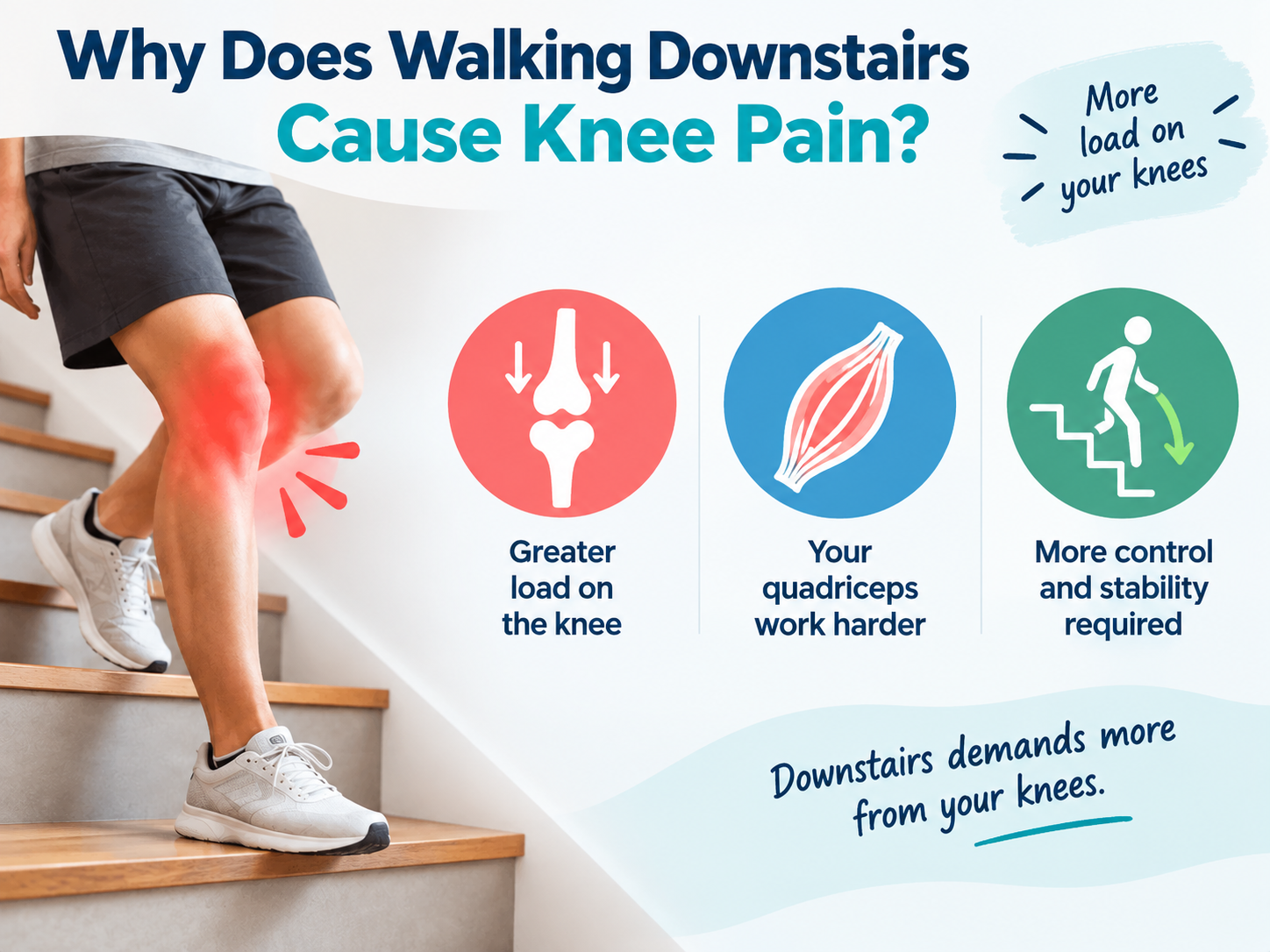
If the muscles around your knee are weak, the kneecap is not tracking smoothly, or the joint has become irritated, descending stairs can cause pain. You may notice discomfort at the front of the knee, around the kneecap or deeper within the joint.
Common Causes of Knee Pain When Going Downstairs
-
Patellofemoral Pain
Patellofemoral pain syndrome is a common cause of pain around or behind the kneecap. It can develop from repetitive activity, changes in exercise, muscle weakness or altered movement patterns.
Pain may become particularly noticeable when going downstairs, squatting, running or sitting for extended periods.
-
Knee Osteoarthritis
Osteoarthritis occurs when the tissues within the knee gradually undergo changes. It can cause knee pain in Berwick, stiffness, swelling and reduced mobility.
Stairs may become increasingly uncomfortable because they place greater demands on the joint. Symptoms can be more noticeable after periods of inactivity or following prolonged activity.
-
Meniscus Injury
The menisci are pieces of cartilage that help cushion and stabilise the knee. A tear can occur following a twisting injury or, in some cases, develop gradually.
Along with pain, you may experience swelling, catching, clicking or difficulty fully bending or straightening the knee.
-
Tendon or Muscle Problems
Irritation involving the patellar or quadriceps tendon can cause pain around the front of the knee. Tight or weak muscles around the hips and legs may also affect how the knee moves and increase discomfort during activities such as descending stairs.
What Other Symptoms Should You Watch For?
Knee pain is more concerning when it occurs alongside other symptoms. Seek medical assessment if you experience significant swelling, instability, locking, severe pain, difficulty putting weight through the leg or symptoms following a substantial injury.
A healthcare professional can assess your symptoms, movement and joint function to determine the likely cause.
How Can You Reduce Knee Pain When Walking Downstairs?
If your knee pain is mild and hasn’t resulted from a significant injury, temporarily reducing activities that aggravate it may help. Avoid repeatedly pushing through painful movements while the knee is irritated.
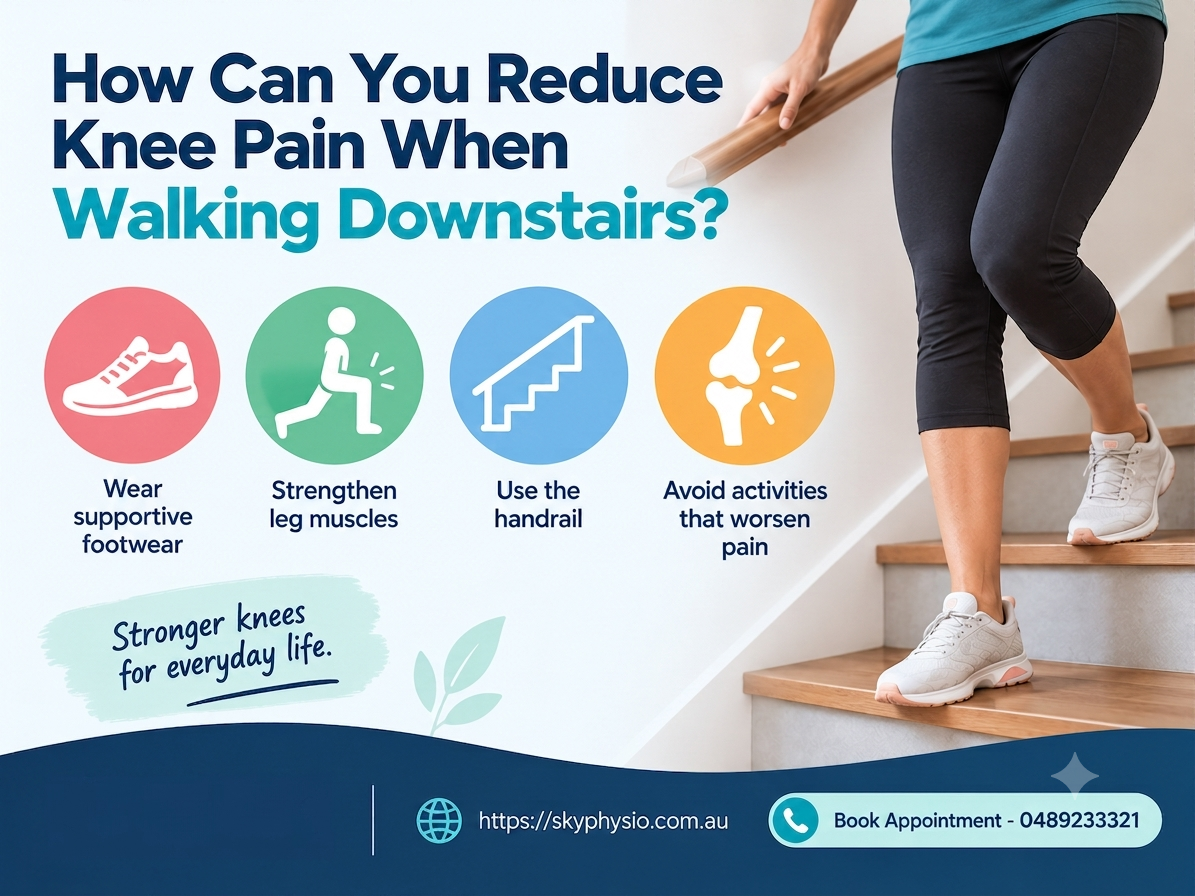
Strengthening the muscles around the hips and knees can also improve movement control. A physiotherapist can recommend exercises based on your individual symptoms rather than relying on a one-size-fits-all programme.
When using stairs, take your time and use the handrail if needed. Wearing comfortable, supportive footwear may also help you feel more stable.
When Should You See a Physiotherapist or Doctor?
Consider professional assessment if knee pain persists, repeatedly returns or interferes with walking, exercise, work or everyday activities.
A physiotherapist can assess strength, flexibility, movement patterns and joint function, while a doctor may investigate potential injuries or conditions requiring further medical management.

Early assessment can be particularly useful if the knee pain in Narre Warren or the suburb where you are located is getting worse rather than gradually improving.
The Bottom Line
Knee pain when walking downstairs can have several causes, from patellofemoral pain and muscle weakness to osteoarthritis or meniscus problems. Because different conditions can produce similar symptoms, persistent pain should not be self-diagnosed.
If your knee pain is affecting your daily activities or continuing despite sensible activity modification, professional assessment can help identify the cause and guide an appropriate treatment plan.
Take the Next Step Towards Healthier Knees
Don’t let persistent knee pain limit your everyday life. SKY PHYSIO can assess your symptoms and help you work towards safer, more comfortable movement. Book an appointment today by calling 0489233321.
FAQs on Knee Pain
- When should I see a physiotherapist for knee pain?
See a physiotherapist if knee pain persists, keeps returning or affects walking, stairs, exercise or daily activities.
- Should I see a doctor or physiotherapist for knee pain?
A physiotherapist can assess many movement and musculoskeletal problems. See a doctor for severe pain, significant injury, major swelling or concerning symptoms.
- Is knee swelling a reason to seek medical advice?
Yes. Persistent or significant swelling should be assessed to determine its underlying cause.
- Why does my knee feel like it may give way?
Knee instability can be associated with muscle weakness, ligament problems, joint conditions or other injuries and should be professionally assessed.
- What does a physiotherapist do for knee pain?
A physiotherapist can assess your movement, strength and joint function and develop an individualised exercise and rehabilitation plan.
- Can physiotherapy help with knee pain when walking downstairs?
Yes. Depending on the cause, physiotherapy may help improve strength, movement control, flexibility and confidence when using stairs.